Friday, December 29, 2017

Happy 8th Birthday, KrebsOnSecurity!

Eight years ago today I set aside my Washington Post press badge and became an independent here at KrebsOnSecurity.com. What a wild ride it has been. Thank you all, Dear Readers, for sticking with me and for helping to build a terrific community.

This past year KrebsOnSecurity published nearly 160 stories, generating more than 11,000 reader comments. The pace of publications here slowed down in 2017, but then again I have been trying to focus on quality over quantity, and many of these stories took weeks or months to report and write.

As always, a big Thank You to readers who sent in tips and personal experiences that helped spark stories here. For anyone who wishes to get in touch, I can always be reached via this site’s contact form, or via email at krebsonsecurity @ gmail dot com.

Here are some other ways to reach out:

Twitter (open DMs)

Facebook

via Wickr at “krebswickr”

Protonmail: krebsonsecurity at protonmail dot com

Keybase

Below are the Top 10 most-read stories of 2017, as decided by views and sorted in reverse chronological order:

The Market for Stolen Account Credentials

Phishers are Upping Their Game: So Should You

Equifax Breach Fallout: Your Salary History

USPS’ Informed Delivery is a Stalker’s Dream

The Equifax Breach: What You Should Know

Got Robocalled? Don’t Get Mad, Get Busy

Why So Many Top Hackers Hail from Russia

Post-FCC Privacy Rules: Should You VPN?

If Your iPhone is Stolen, These Guys May Try to iPhish You

Who is Anna-Senpai, the Mirai Worm Author?


from
https://krebsonsecurity.com/2017/12/happy-8th-birthday-krebsonsecurity/

Thursday, December 28, 2017

4 Years After Target, the Little Guy is the Target

Dec. 18 marked the fourth anniversary of this site breaking the news about a breach at Target involving some 40 million customer credit and debit cards. It has been fascinating in the years since that epic intrusion to see how organized cyber thieves have shifted from targeting big box retailers to hacking a broad swath of small to mid-sized merchants.

In many ways, not much has changed: The biggest underground shops that sell stolen cards still index most of their cards by ZIP code. Only, the ZIP code corresponds not to the legitimate cardholder’s billing address but to the address of the hacked store at which the card in question was physically swiped (the reason for this is that buyers of these cards tend to prefer cards used by people who live in their geographic area, as the subsequent fraudulent use of those cards tends to set off fewer alarm bells at the issuing bank).

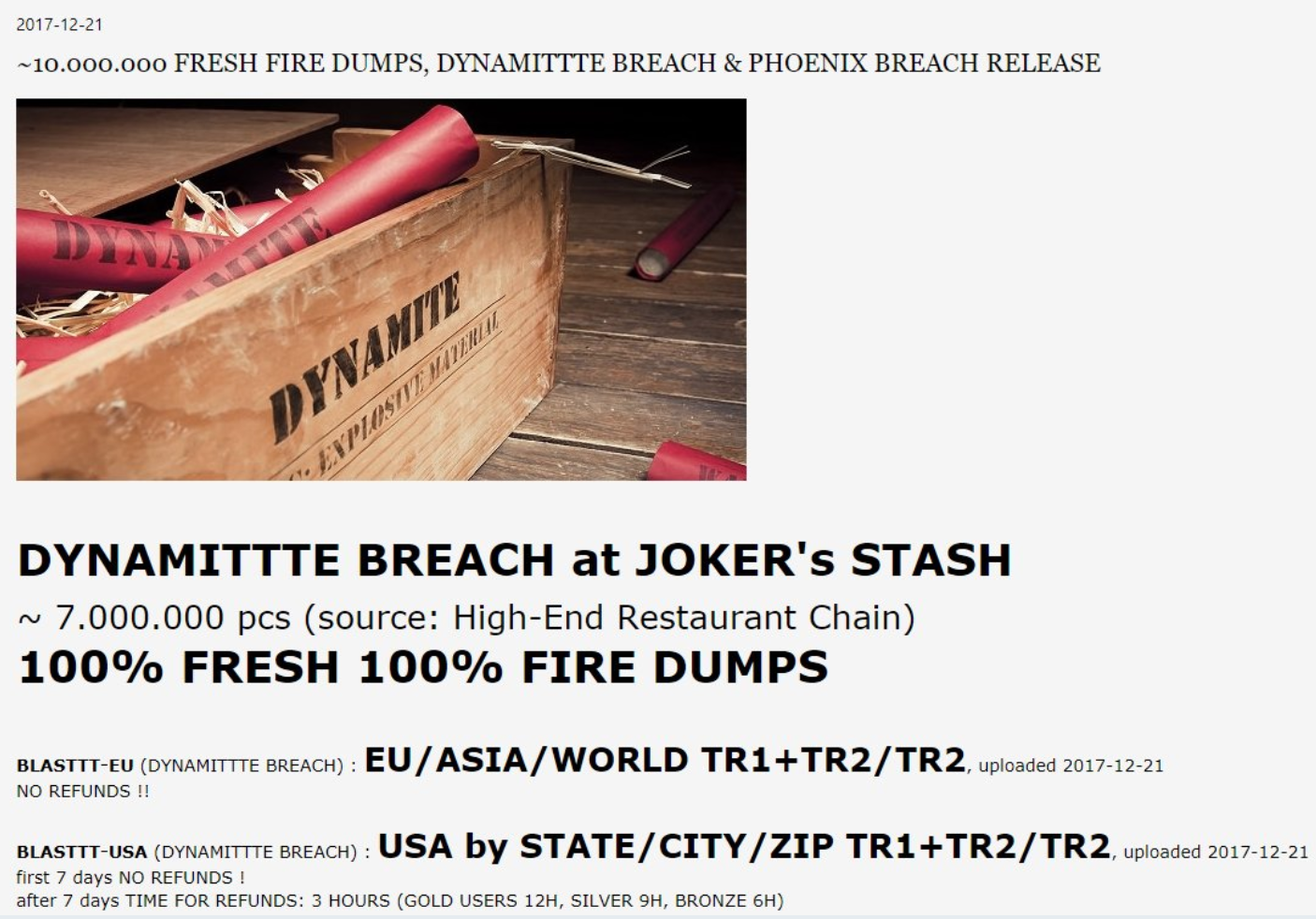
Last week I was researching a story published here this week on how a steep increase in transaction fees associated with Bitcoin is causing many carding shops to recommend alternate virtual currencies like Litecoin. And I noticed that popular carding store Joker’s Stash had just posted a new batch of cards dubbed “Dynamittte,” which boasted some 7 million cards advertised as “100 percent” valid — meaning the cards were so fresh that even the major credit card issuers probably didn’t yet know which retail or restaurant breach caused this particular breach.

An advertisement for a large new batch of stolen credit card accounts for sale at the Joker’s Stash Dark Web market.

Translation: These stolen cards were far more likely to still be active and useable after fraudsters encode the account numbers onto fake plastic and use the counterfeits to go shopping in big box stores.

I pinged a couple of sources who track when huge new batches of stolen cards hit the market, and both said the test cards they’d purchased from the Joker’s Stash Dynamittte batch mapped back to customers who all had one thing in common: They’d all recently eaten at a Jason’s Deli location.

Jason’s Deli is a fast casual restaurant chain based in Beaumont, Texas, with approximately 266 locations in 28 states. Seeking additional evidence as to the source of the breach, I turned to the Jason’s Deli Web site and scraped the ZIP codes for their various stores across the country. Then I began comparing those ZIPs with the ZIPs tied to this new Dynamittte batch of cards at Joker’s Stash.

Checking my work were the folks at Mindwise.io, a threat intelligence startup in California that monitors Dark Web marketplaces and tries to extract useful information from them. Mindwise found a nearly 100 percent overlap between the ZIP codes on the “Blasttt-US” unit of the Dynamittte cards for sale and the ZIP codes for Jason’s Deli locations.

Reached for comment, Jason’s Deli released the following statement:

“On Friday, Dec. 22, 2017, our company was notified by payment processors – the organizations that manage the electronic connections between Jason’s Deli locations and payment card issuers – that MasterCard security personnel had informed it that a large quantity of payment card information had appeared for sale on the ‘dark web,’ and that an analysis of the data indicated that at least a portion of the data may have come from various Jason’s Deli locations.”

“Jason’s Deli’s management immediately activated our response plan, including engagement of a leading threat response team, involvement of other forensic experts, and cooperation with law enforcement. Among the questions that investigators are working to determine is whether in fact a breach took place, and if so, to determine its scope, the method employed, and whether there is any continuing breach or vulnerability.”

“The investigation is in its early stages and, as is typical in such situations, we expect it will take some time to determine exactly what happened. Jason’s Deli will provide as much information as possible as the inquiry progresses, bearing in mind that security and law enforcement considerations may limit the amount of detail we can provide.”

It’s important to note that the apparent breach at Jason’s Deli almost certainly does not correspond to 7 million cards; typically, carding shop owners will mix cards stolen from multiple breaches into one much larger batch (Dynamittte), and often further subdivide the cards by region (US vs. European cards).

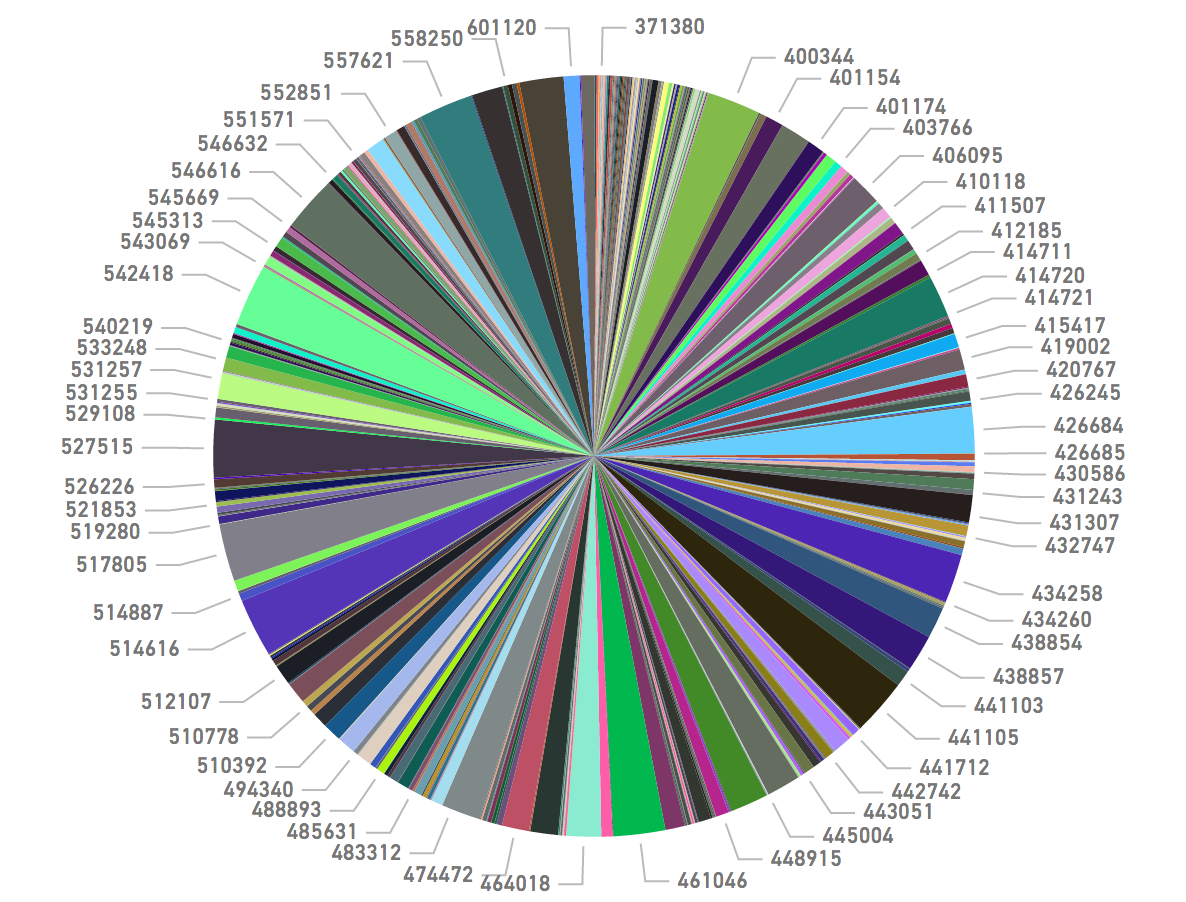
As run-of-the-mill as these card breaches have become, it’s still remarkable even in smaller batches of cards like those apparently stolen from Jason’s Deli customers just how many financial institutions are impacted with each breach.

Banks impacted by the apparent breach at Jason’s Deli, sorted by Bank ID Number (BIN) — i.e. the issuer identified by the first six digits in the card number.

Mindwise said it was comfortable concluding that at least 170,000 of the cards for put up for sale this past week on Joker’s Stash map back to Jason’s Deli locations. That may seem like a drop in the bucket compared to the 40 million cards that thieves hauled away from Target four years ago, but the cards stolen from Jason’s Deli customers were issued by more than 250 banks and credit unions, most of which will adopt differing strategies on how to manage fraud on those cards.

In other words, by moving down the food chain to smaller but far more plentiful and probably less secure merchants (either by choice or because the larger stores became a harder target) — and by mixing cards stolen from multiple breaches — the fraudsters have made it less likely that breaches at chain stores will be detected and remediated quickly, thereby prolonging the value and use of the stolen cards put up for sale in underground marketplaces.

All that said, it’s really not worth it to spend time worrying about where your card number may have been breached, since it’s almost always impossible to say for sure and because it’s common for the same card to be breached at multiple establishments during the same time period.

Just remember that although consumers are not liable for fraudulent charges, it may still fall to you the consumer to spot and report any suspicious charges. So keep a close eye on your statements, and consider signing up for text message notifications of new charges if your card issuer offers this service. Most of these services also can be set to alert you if you’re about to miss an upcoming payment, so they can also be handy for avoiding late fees and other costly charges.

Related reading (i.e., other breach stories confirmed with ZIP code analysis):

Breach at Sonic Drive-in May Have Impacted Millions of Credit, Debit Cards

Zip Codes Show Extent of Sally Beauty Breach

Data: Nearly All U.S. Home Depot Stores Hit

Cards Stolen in Target Breach Flood Underground Markets


from
https://krebsonsecurity.com/2017/12/4-years-after-target-the-little-guy-is-the-target/

Tuesday, December 26, 2017

Skyrocketing Bitcoin Fees Hit Carders in Wallet

Critics of unregulated virtual currencies like Bitcoin have long argued that the core utility of these payment systems lies in facilitating illicit commerce, such as buying drugs or stolen credit cards and identities. But recent spikes in the price of Bitcoin — and the fees associated with moving funds into and out of it — have conspired to make Bitcoin a less useful and desirable payment method for many crooks engaged in these activities.

Bitcoin’s creator(s) envisioned a currency that could far more quickly and cheaply facilitate payments, with tiny transaction fees compared to other, more established and regulated forms of payment (such as credit cards). And indeed, until the beginning of 2017 those fees were well below $1, frequently less than 10 cents per transaction.

But as the price of Bitcoin has soared over the past few months to more than $15,000 per coin, so have the Bitcoin fees per transaction. This has made Bitcoin far less attractive for conducting small-dollar transactions (for more on this shift, see this Dec. 19 story from Ars Technica).

As a result, several major underground markets that traffic in stolen digital goods are now urging customers to deposit funds in alternative virtual currencies, such as Litecoin. Those who continue to pay for these commodities in Bitcoin not only face far higher fees, but also are held to higher minimum deposit amounts.

“Due to the drastic increase in the Bitcoin price, we faced some difficulties,” reads the welcome message for customers after they log in to Carder’s Paradise, a Dark Web marketplace that KrebsOnSecurity featured in a story last week.

“The problem is that we send all your deposited funds to our suppliers which attracts an additional Bitcoin transaction fee (the same fee you pay when you make a deposit),” Carder’s Paradise explains. “Sometimes we have to pay as much as 5$ from every 1$ you deposited.”

The shop continues:

“We have to take additionally a ‘Deposit fee’ from all users who deposit in Bitcoins. This is the amount we spent on transferring your funds to our suppliers. To compensate your costs, we are going to reduce our prices, including credit cards for all users and offer you the better bitcoin exchange rate.”

“The amount of the Deposit Fee depends on the load on the Bitcoin network. However, it stays the same regardless of the amount deposited. Deposits of 10$ and 1000$ attract the same deposit fee.”

“If the Bitcoin price continues increasing, this business is not going to be profitable for us anymore because all our revenue is going to be spent on the Bitcoin fees. We are no longer in possession of additional funds to improve the store.”

“We urge you to start using Litecoin as much as possible. Litecoin is a very fast and cheap way of depositing funds into the store. We are not going to charge any additional fees if you deposit Litecoins.”

On Carder’s Paradise, the current minimum deposit amount is 0.0066 BTCs, or approximately USD $100. The deposit fee for each transaction is $15.14. That means that anyone who deposits just the minimum amount into this shop is losing more than 15 percent of their deposit in transaction fees.

Incredibly, the administrators of Carder’s Paradise apparently received so much pushback from crooks using their service that they decided to lower the price of stolen credit cards to make potential buyers feel better about higher transaction fees.

“Our team made a decision to adjust the previous announcement and provide a fair solution for everyone by reducing the credit cards [sic] prices,” the message concludes.

Mainstream merchants that accept credit card payments have long griped about the high cost of transaction fees, which average $2.50 to $3.00 on a $100 charge. What’s fascinating about the spike in Bitcoin transaction fees is that crooks could end up paying five times as much in fees just to purchase the same amount in stolen credit card accounts!


from
https://krebsonsecurity.com/2017/12/skyrocketing-bitcoin-fees-hit-carders-in-wallet/

Thursday, December 21, 2017

U.K. Man Avoids Jail Time in vDOS Case

A U.K. man who pleaded guilty to launching more than 2,000 cyberattacks against some of the world’s largest companies has avoided jail time for his role in the attacks. The judge in the case reportedly was moved by pleas for leniency that cited the man’s youth at the time of the attacks and a diagnosis of autism.

In early July 2017, the West Midlands Police in the U.K. arrested 19-year-old Stockport resident Jack Chappell and charged him with using a now-defunct attack-for-hire service called vDOS to launch attacks against the Web sites of AmazonBBCBTNetflixT-MobileVirgin Media, and Vodafone, between May 1, 2015 and April 30, 2016.

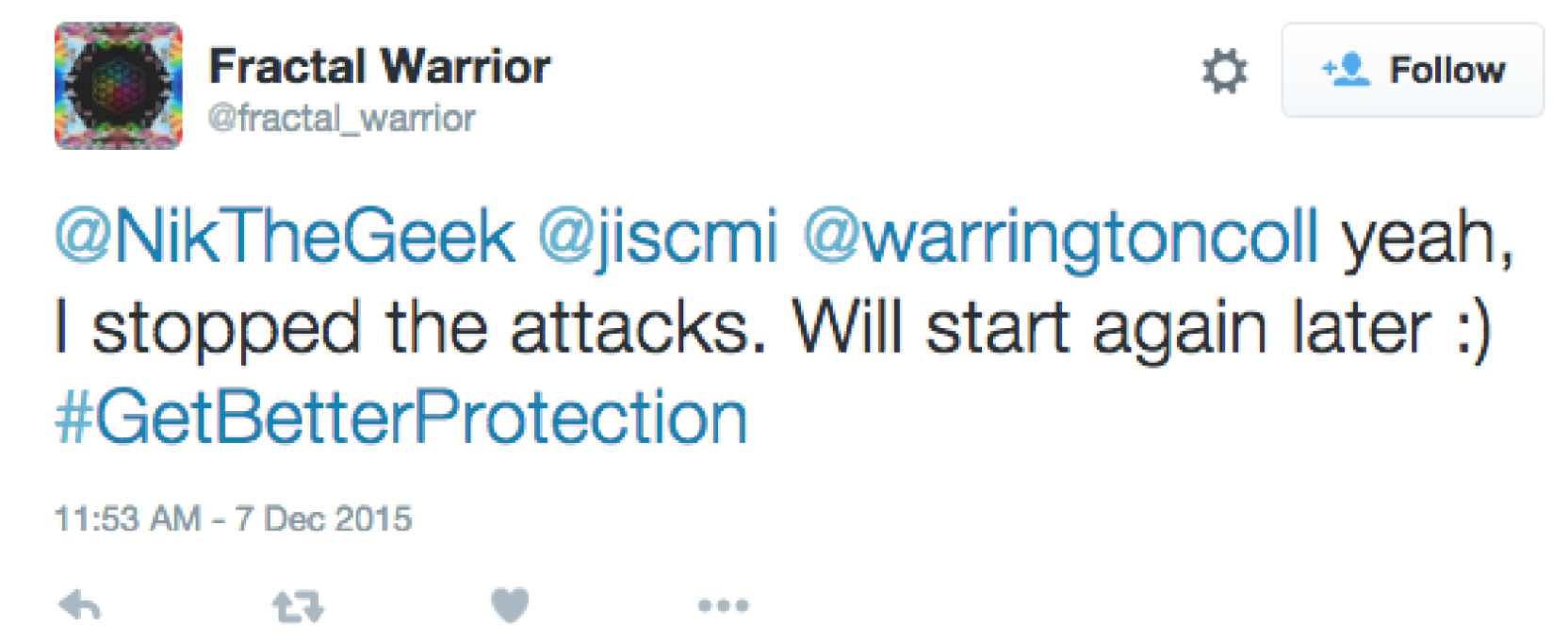
One of several taunting tweets Chappell sent to his DDoS victims.

Chappell also helped launder money for vDOS, which until its demise in September 2016 was by far the most popular and powerful attack-for-hire service — allowing even completely unskilled Internet users to launch crippling assaults capable of knocking most Web sites offline.

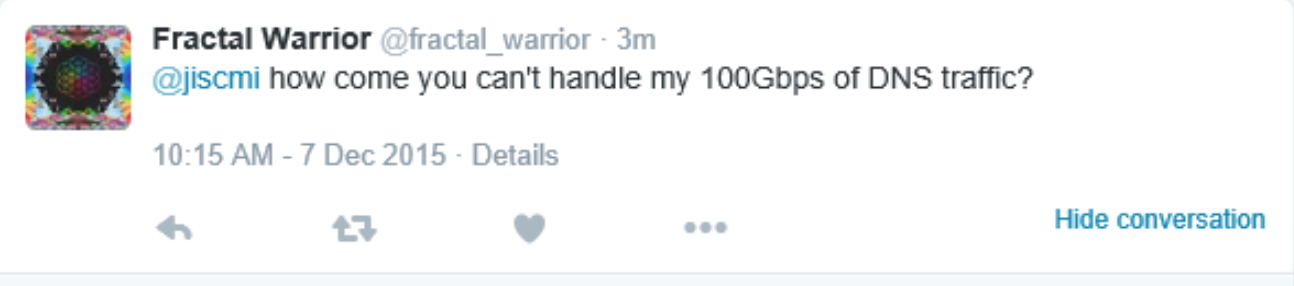
Using the Twitter handle @fractal_warrior, Chappell would taunt his victims while  launching attacks against them. The tweet below was among several sent to the Jisc Janet educational support network and Manchester College, where Chappell was a student. In total, Chappell attacked his school at least 21 times, prosecutors showed.

Another taunting Chappell tweet.

Chappell was arrested in April 2016 after investigators traced his Internet address to his home in the U.K. For more on the clues that likely led to his arrest, check out this story.

Nevertheless, the judge in the case was moved by pleas from Chappell’s lawyer, who argued that his client was just an impressionable youth at the time who has autism, a range of conditions characterized by challenges with social skills, repetitive behaviors, speech and nonverbal communication.

The defense called on an expert who reportedly testified that Chappell was “one of the most talented people with a computer he had ever seen.”

“He is in some ways as much of a victim, he has been exploited and used,” Chappell’s attorney Stuart Kaufman told the court, according to the Manchester Evening News. “He is not malicious, he is mischievous.”

The same publication quoted Judge Maurice Greene at Chappell’s sentencing this week, saying to the young man: “You were undoubtedly taken advantage of by those more criminally sophisticated than yourself. You would be extremely vulnerable in a custodial element.”

Judge Greene decided to suspend a sentence of 16 months at a young offenders institution; Chappell will instead “undertake 20 days rehabilitation activity,” although it’s unclear exactly what that will entail.

ANALYSIS/RANT

It’s remarkable when someone so willingly and gleefully involved in a crime spree such as this can emerge from it looking like the victim. “Autistic Hacker Had Been Exploited,” declared a headline about the sentence in the U.K. newspaper The Times.

After reading the coverage of this case in the press, I half expected to see another story saying someone had pinned a medal on Chappell or offered him a job.

Jack Chappell, outside of a court hearing in the U.K. earlier this year.

Yes, Chappell will have the stain of a criminal conviction on his record, and yes autism can be a very serious and often debilitating illness. Let me be clear: I am not suggesting that offenders like this young man should be tossed in jail with violent criminals.

But courts around the world continue to send a clear message that young men essentially can do whatever they like when it comes to DDoS attacks and that there will be no serious consequences as a result.

Chappell launched his attacks via vDOS, which provided a simple, point-and-click service that allowed even completely unskilled Internet users to launch massive DDoS attacks. vDOS made more than $600,000 in just two of the four years it was in operation, launching more than 150,000 attacks against thousands of victims (including this site).

In September 2016, vDOS was taken offline and its alleged co-creators — two Israeli man who created the business when they were 14 and 15 years old — were arrested and briefly detained by Israeli authorities. But despite assurances that the men (now adults) would be tried for their crimes, neither has been prosecuted.

In July 2017, a court in Germany issued a suspended sentence for Daniel Kaye, a 29-year-old man who allegedly launched extortionist DDoS attacks against several bank Web sites.

After the source code for the Mirai botnet malware was released in September 2016, Kaye built his own Mirai botnet and used it in several high-profile attacks, including a fumbled assault that knocked out Internet service to more than 900,000 Deutsche Telekom customers.

In his trial, Kaye admitted that a customer of his paid him $10,000 to attack the Liberian ISP Lonestar. He’s also thought to have launched DDoS attacks on Lloyds Banking Group and Barclays banks in January 2017. Kaye is now facing related cybercrime charges in the U.K.

Last week, the U.S. Justice Department unsealed the cases of two young men in the United States who have pleaded guilty to co-authoring Mirai, an “Internet of Things” (IoT) malware strain that has been used to create dozens of copycat Mirai botnets responsible for countless DDoS attacks over the past 15 months. Jha and his co-defendants in that case launched highly disruptive and extortionist attacks against a number of Web sites and used their creation to conduct lucrative click fraud schemes.

Like Chappell, the core author of Mirai — 21-year-old Fanwood, N.J. resident Paras Jha — launched countless DDoS attacks against his school, costing Rutgers University between $3.5 million and $9 million to defend against and clean up after the assaults (the actual damages will be decided at Jha’s sentencing in March 2018).

Time will tell if Kaye or Jha and his co-defendants receive any real punishment for their crimes. But I would submit that if we don’t have the stomach to put these “talented young hackers” in jail when they’re ultimately found guilty, perhaps we should consider harnessing their skills in less draconian but still meaningfully punitive ways, such as requiring them to serve several years participating in programs designed to keep other kids from following in their footsteps.

Doing anything less smacks of a disservice to justice, glorifies DDoS as an essentially victimless crime, and serves little deterrent that might otherwise make it less likely that we will see fewer such cases going forward.


from
https://krebsonsecurity.com/2017/12/u-k-man-avoids-jail-time-in-vdos-case/

Tuesday, December 19, 2017

Buyers Beware of Tampered Gift Cards

Prepaid gift cards make popular presents and no-brainer stocking stuffers, but before you purchase one be on the lookout for signs that someone may have tampered with it. A perennial scam that picks up around the holidays involves thieves who pull back and then replace the decals that obscure the card’s redemption code, allowing them to redeem or transfer the card’s balance online after the card is purchased by an unwitting customer.

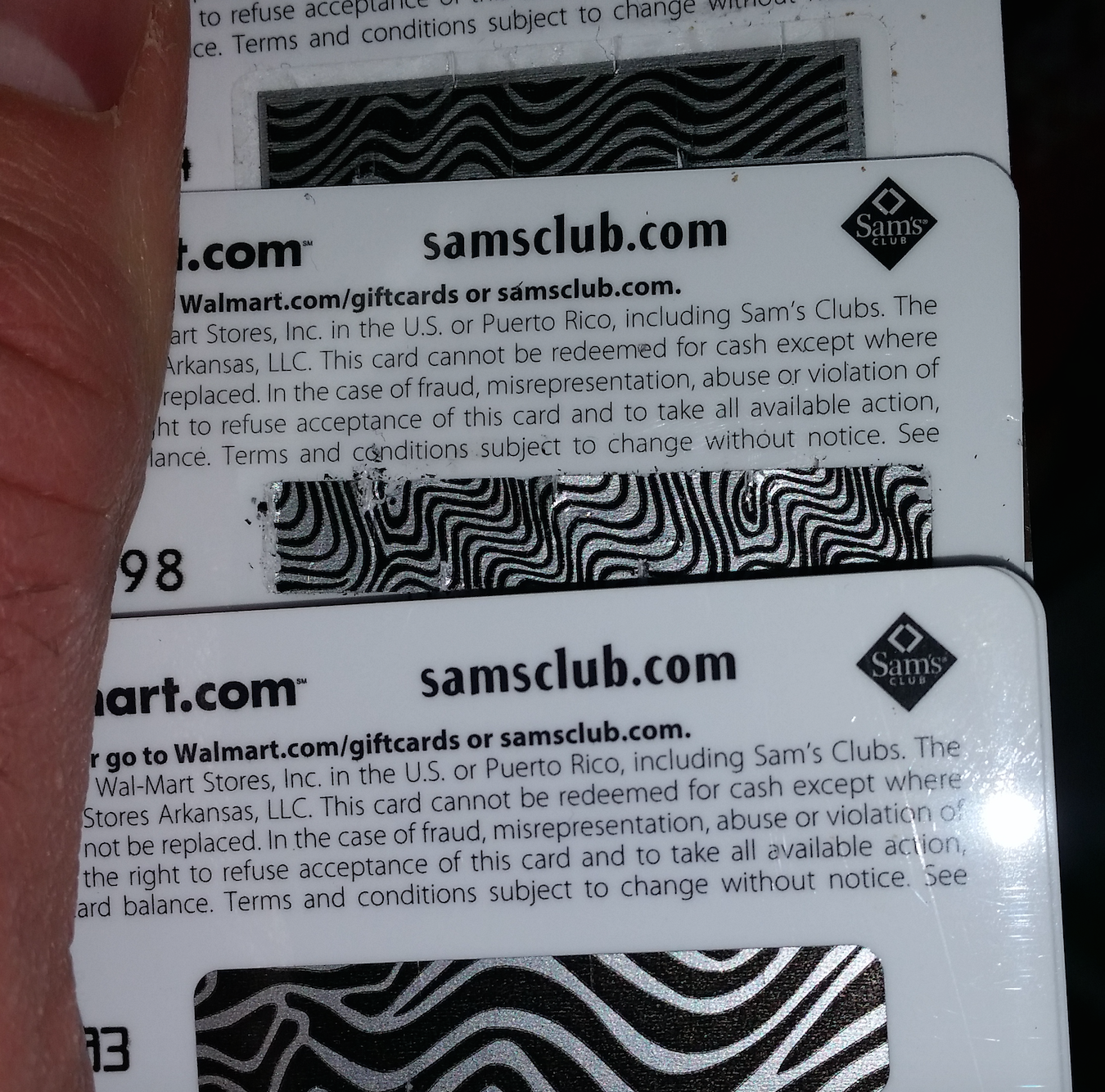
Last week KrebsOnSecurity heard from Colorado reader Flint Gatrell, who reached out after finding that a bunch of Sam’s Club gift cards he pulled off the display rack at Wal-Mart showed signs of compromise. The redemption code was obscured by a watermarked sticker that is supposed to make it obvious if it has been tampered with, and many of the cards he looked at clearly had stickers that had been peeled back and then replaced.

“I just identified five fraudulent gift cards on display at my local Wal-Mart,” Gatrell said. “They each had their stickers covering their codes peeled back and replaced. I can only guess that the thieves call the service number to monitor the balances, and try to consume them before the victims can.  I’m just glad I thought to check!”

In the picture below, Gatrell is holding up three of the Sam’s Club cards. The top two showed signs of tampering, but the one on the bottom appeared to be intact.

The top two gift cards show signs that someone previously peeled back the protective sticker covering the redemption code. Image: Flint Gatrell.

Kevin Morrison, a senior analyst on the retail banking and payments team at market analysis firm Aite Group, said the gift card scheme is not new but that it does tend to increase in frequency around the holidays, when demand for the cards is far higher.

“Store employees are instructed to look for abnormalities at the [register] but this happens [more] around the holiday season as attention spans tend to shorten,” he said. “While gift card packaging has improved and some safe-guards put in place, fraudsters look for the weakest link and hit hard when they find one.”

Gift cards make great last-minute gifts, but don’t let your guard down in your haste to wrap up your holiday shopping. There are so many variations on the above-described scheme that many stores have taken to keeping gift cards at or behind the register, where cashiers can more easily spot customers trying to tamper with the cards. As a result, stores that take this basic precaution may be the safest place to purchase gift cards.


from
https://krebsonsecurity.com/2017/12/buyers-beware-of-tampered-gift-cards/

Monday, December 18, 2017

The Market for Stolen Account Credentials

Past stories here have explored the myriad criminal uses of a hacked computer, the various ways that your inbox can be spliced and diced to help cybercrooks ply their trade, and the value of a hacked company. Today’s post looks at the price of stolen credentials for just about any e-commerce, bank site or popular online service, and provides a glimpse into the fortunes that an enterprising credential thief can earn selling these accounts on consignment.

Not long ago in Internet time, your typical cybercriminal looking for access to a specific password-protected Web site would most likely visit an underground forum and ping one of several miscreants who routinely leased access to their “bot logs.”

These bot log sellers were essentially criminals who ran large botnets (collections of hacked PCs) powered by malware that can snarf any passwords stored in the victim’s Web browser or credentials submitted into a Web-based login form. For a few dollars in virtual currency, a ne’er-do-well could buy access to these logs, or else he and the botmaster would agree in advance upon a price for any specific account credentials sought by the buyer.

Back then, most of the stolen credentials that a botmaster might have in his possession typically went unused or unsold (aside from the occasional bank login that led to a juicy high-value account). Indeed, these plentiful commodities held by the botmaster for the most part were simply not a super profitable line of business and so went largely wasted, like bits of digital detritus left on the cutting room floor.

But oh, how times have changed! With dozens of sites in the underground now competing to purchase and resell credentials for a variety of online locations, it has never been easier for a botmaster to earn a handsome living based solely on the sale of stolen usernames and passwords alone.

If the old adage about a picture being worth a thousand words is true, the one directly below is priceless because it illustrates just how profitable the credential resale business has become.
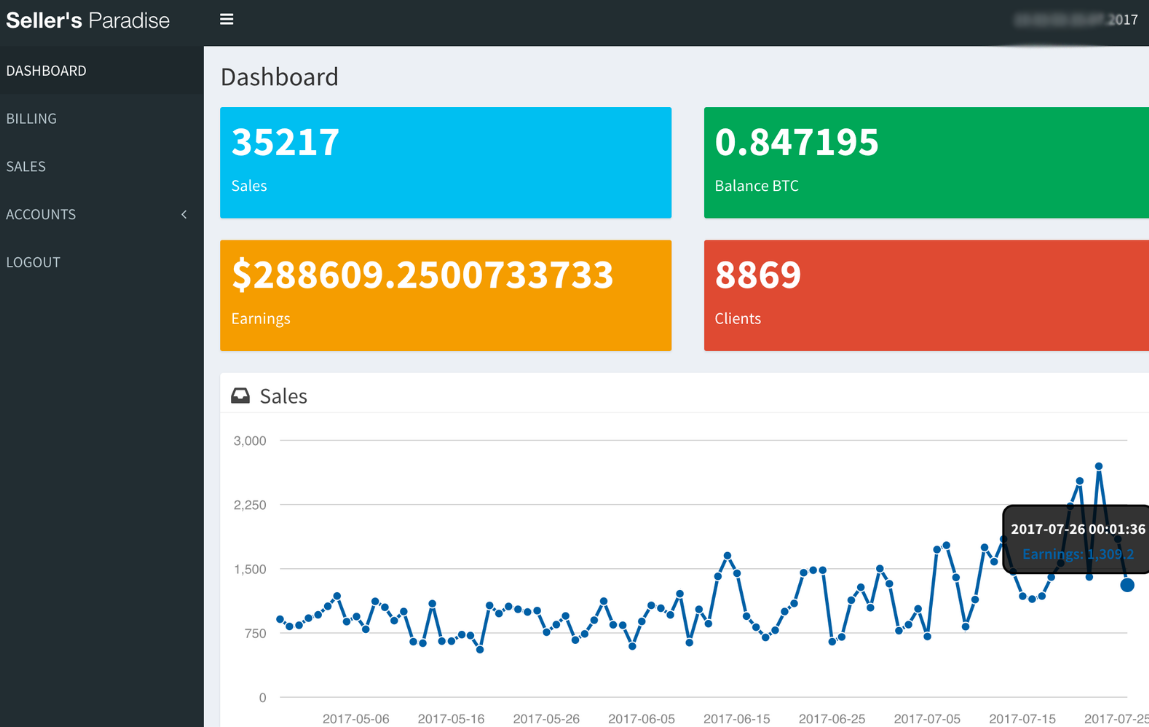
This screen shot shows the earnings panel of a crook who sells stolen credentials for hundreds of Web sites to a dark web service that resells them. This botmaster only gets paid when someone buys one of his credentials. So far this year, customers of this service have purchased more than 35,000 credentials he’s sold to this service, earning him more than $288,000 in just a few months.

The image shown above is the wholesaler division of “Carder’s Paradise,” a bustling dark web service that sells credentials for hundreds of popular Web destinations. The screen shot above is an earnings panel akin to what you would see if you were a seller of stolen credentials to this service — hence the designation “Seller’s Paradise” in the upper left hand corner of the screen shot.

This screen shot was taken from the logged-in account belonging to one of the more successful vendors at Carder’s Paradise. We can see that in just the first seven months of 2017, this botmaster sold approximately 35,000 credential pairs via the Carder’s Paradise market, earning him more than $288,000. That’s an average of $8.19 cents for each credential sold through the service.

Bear in mind that this botmaster only makes money based on consignment: Regardless of how much he uploads to Seller’s Paradise, he doesn’t get paid for any of it unless a Seller’s Paradise customer chooses to buy what he’s selling.

Fortunately for this guy, almost 9,000 different customers of Seller’s Paradise chose to purchase one or more of his username and password pairs. It was not possible to tell from this seller’s account how many credential pairs total that he has contributed to this service which went unsold, but it’s a safe bet that it was far more than 35,000.

[A side note is in order here because there is some delicious irony in the backstory behind the screenshot above: The only reason a source of mine was able to share it with me was because this particular seller re-used the same email address and password across multiple unrelated cybercrime services].

Based on the prices advertised at Carder’s Paradise (again, Carder’s Paradise is the retail/customer side of Seller’s Paradise) we can see that the service on average pays its suppliers about half what it charges customers for each credential. The average price of a credential for more than 200 different e-commerce and banking sites sold through this service is approximately $15.
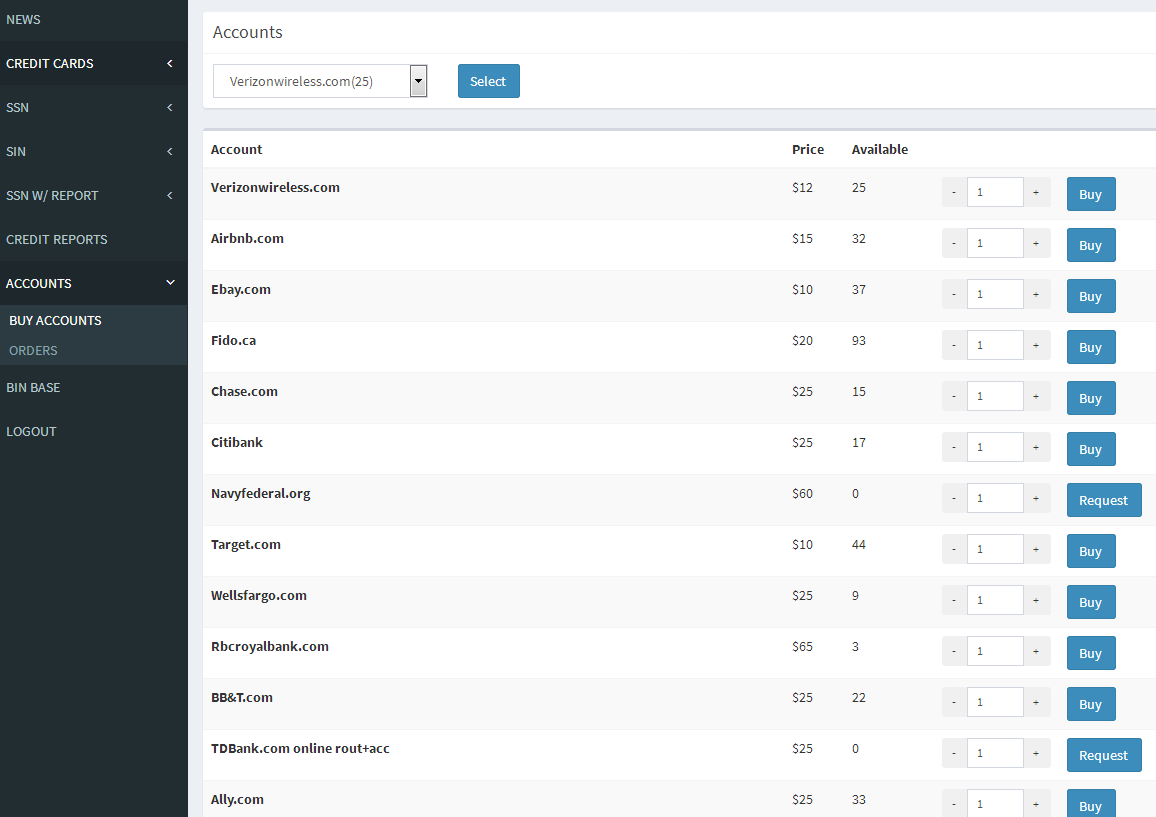
Part of the price list for credentials sold at this dark web ID theft site.

Indeed, fifteen bucks is exactly what it costs to buy stolen logins for airbnb.com, comcast.com, creditkarma.com, logmein.com and uber.com. A credential pair from AT&T Wireless — combined with access to the victim’s email inbox — sells for $30.

The most expensive credentials for sale via this service are those for the electronics store frys.com ($190). I’m not sure why these credentials are so much more expensive than the rest, but it may be because thieves have figured out a reliable and very profitable way to convert stolen frys.com customer credentials into cash.

Usernames and passwords to active accounts at military personnel-only credit union NavyFederal.com fetch $60 apiece, while credentials to various legal and data aggregation services from Thomson Reuters properties command a $50 price tag.

The full price list of credentials for sale by this dark web service is available in this PDF. For CSV format, see this link. Both lists are sorted alphabetically by Web site name.

This service doesn’t just sell credentials: It also peddles entire identities — indexed and priced according to the unwitting victim’s FICO score. An identity with a perfect credit score (850) can demand as much as $150.
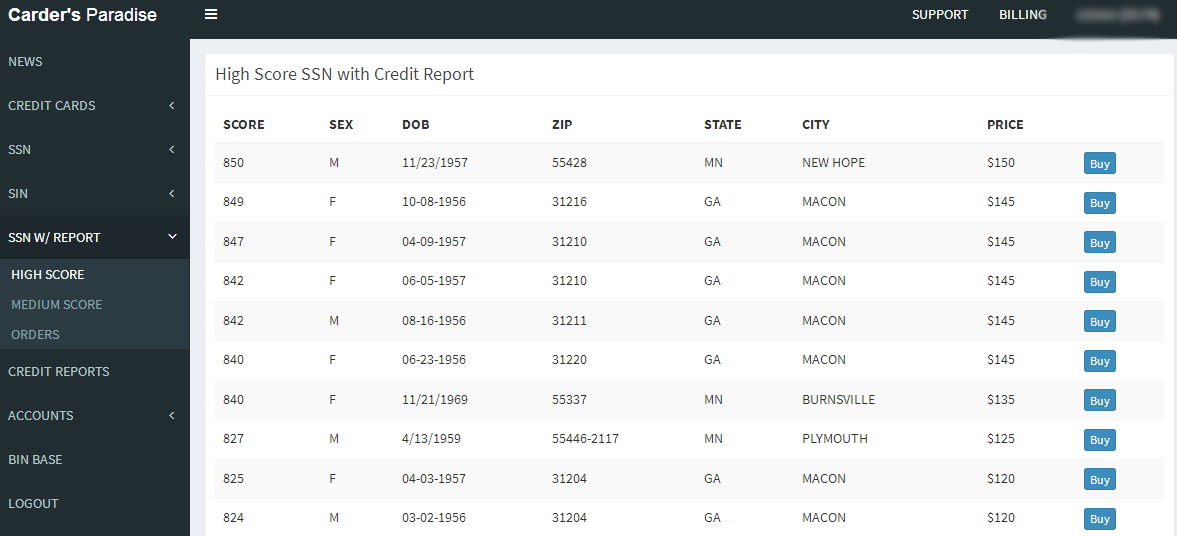
Stolen identities with high credit scores fetch higher prices.

And of course this service also offers the ability to pull full credit reports on virtually any American — from all three major credit bureaus — for just $35 per bureau.
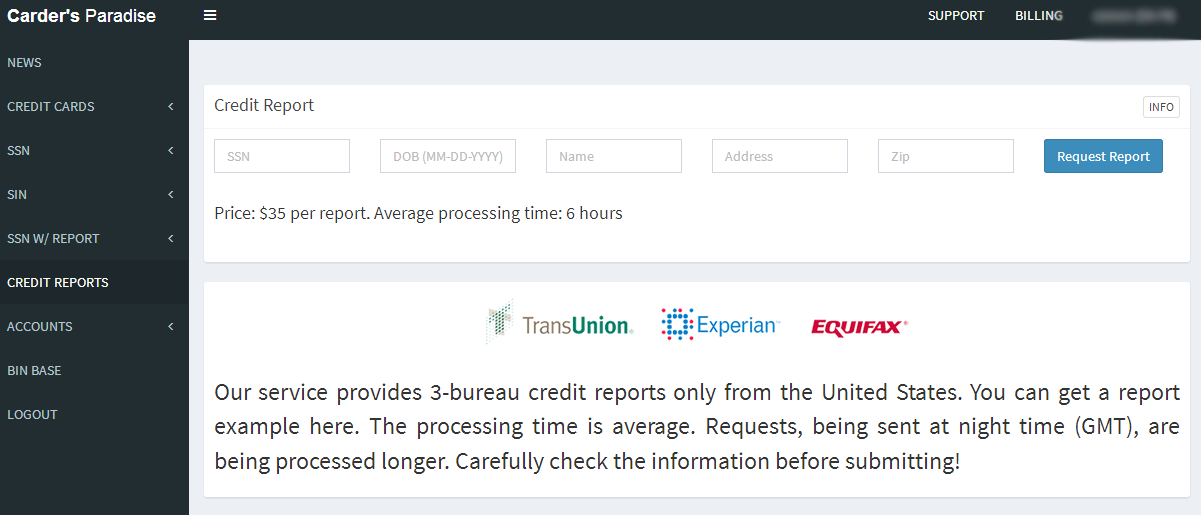
It costs $35 through this service to pull someone’s credit file from the three major credit bureaus.

Plenty of people began freaking out earlier this year after a breach at big-three credit bureau Equifax jeopardized the Social Security Numbers, dates of birth and other sensitive date on more than 145 million Americans. But as I have been trying to tell readers for many years, this data is broadly available for sale in the cybercrime underground on a significant portion of the American populace.

If the threat of identity theft has you spooked, place a freeze on your credit file and on the file of your spouse (you may even be able to do this for your kids). Credit monitoring is useful for letting you know when someone has stolen your identity, but these services can’t be counted on to stop an ID thief from opening new lines of credit in your name.

They are, however, useful for helping to clean up identity theft after-the-fact. This story is already too long to go into the pros and cons of credit monitoring vs. freezes, so I’ll instead point to a recent primer on the topic and urge readers to check it out.

Finally, it’s a super bad idea to re-use passwords across multiple sites. KrebsOnSecurity this year has written about multiple, competing services that sell or sold access to billions of usernames and passwords exposed in high profile data breaches at places like Linkedin, Dropbox and Myspace. Crooks pay for access to these stolen credential services because they know that a decent percentage of Internet users recycle the same password at multiple sites.

One alternative to creating and remembering strong, lengthy and complex passwords for every important site you deal with is to outsource this headache to a password manager.  If the online account in question allows 2-factor authentication (2FA), be sure to take advantage of that.

Two-factor authentication makes it much harder for password thieves (or their customers) to hack into your account just by stealing or buying your password: If you have 2FA enabled, they also would need to hack that second factor (usually your mobile device) before being able to access your account. For a list of sites that support 2FA, check out twofactorauth.org.


from
https://krebsonsecurity.com/2017/12/the-market-for-stolen-account-credentials/

Friday, December 15, 2017

Former Botmaster, ‘Darkode’ Founder is CTO of Hacked Bitcoin Mining Firm ‘NiceHash’

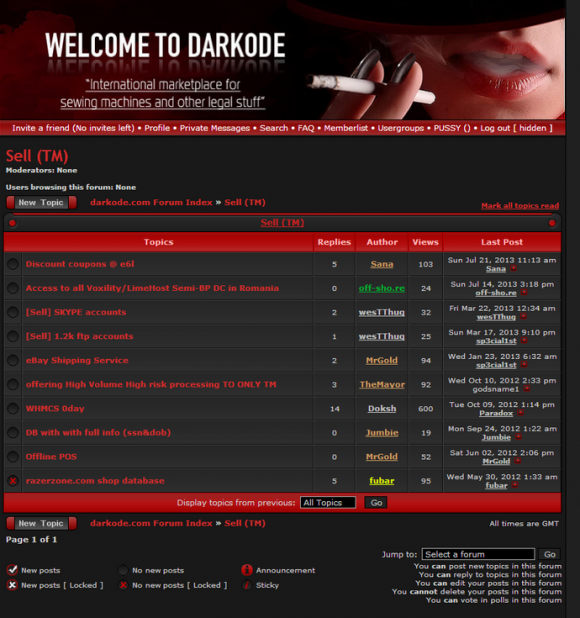
On Dec. 6, 2017, approximately USD $52 million worth of Bitcoin mysteriously disappeared from the coffers of NiceHash, a Slovenian company that lets users sell their computing power to help others mine virtual currencies. As the investigation into the heist nears the end of its second week, many Nice-Hash users have expressed surprise to learn that the company’s chief technology officer recently served several years in prison for operating and reselling a massive botnet, and for creating and running ‘Darkode,” until recently the world’s most bustling English-language cybercrime forum.

In December 2013, NiceHash CTO Matjaž Škorjanc was sentenced to four years, ten months in prison for creating the malware that powered the ‘Mariposa‘ botnet. Spanish for “Butterfly,” Mariposa was a potent crime machine first spotted in 2008. Very soon after, Mariposa was estimated to have infected more than 1 million hacked computers — making it one of the largest botnets ever created.

An advertisement for the ButterFly Flooder, a crimeware product based on the ButterFly Bot.

ButterFly Bot, as it was more commonly known to users, was a plug-and-play malware strain that allowed even the most novice of would-be cybercriminals to set up a global operation capable of harvesting data from thousands of infected PCs, and using the enslaved systems for crippling attacks on Web sites. The ButterFly Bot kit sold for prices ranging from $500 to $2,000.

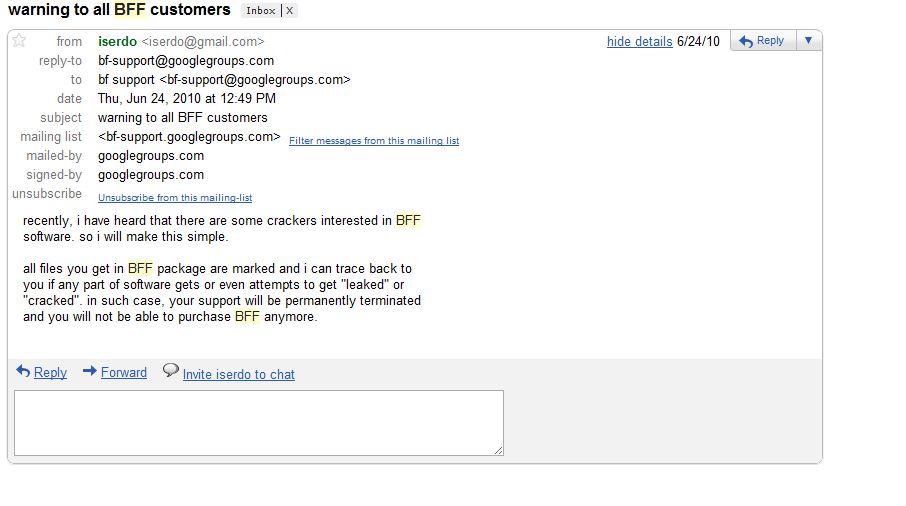
Prior to his initial arrest in Slovenia on cybercrime charges in 2010, Škorjanc was best known to his associates as “Iserdo,” the administrator and founder of the exclusive cybercrime forum Darkode.

A message from Iserdo warning Butterfly Bot subscribers not to try to reverse his code.

On Darkode, Iserdo sold his Butterfly Bot to dozens of other members, who used it for a variety of illicit purposes, from stealing passwords and credit card numbers from infected machines to blasting spam emails and hijacking victim search results. Microsoft Windows PCs infected with the bot would then try to spread the disease over MSN Instant Messenger and peer-to-peer file sharing networks.

In July 2015, authorities in the United States and elsewhere conducted a global takedown of the Darkode crime forum, arresting several of its top members in the process. The U.S. Justice Department at the time said that out of 800 or so crime forums worldwide, Darkode represented “one of the gravest threats to the integrity of data on computers in the United States and around the world and was the most sophisticated English-speaking forum for criminal computer hackers in the world.”

Following Škorjanc’s arrest, Slovenian media reported that his mother Zdenka Škorjanc was accused of money laundering; prosecutors found that several thousand euros were sent to her bank account by her son. That case was dismissed in May of this year after prosecutors conceded she probably didn’t know how her son had obtained the money.

Matjaž Škorjanc did not respond to requests for comment. But local media reports state that he has vehemently denied any involvement in the disappearance of the NiceHash stash of Bitcoins.

In an interview with Slovenian news outlet Delo.si, the NiceHash CTO described the theft “as if his kid was kidnapped and his extremities would be cut off in front of his eyes.” A roughly-translated English version of that interview has been posted to Reddit.

According to media reports, the intruders were able to execute their heist after stealing the credentials of a user with administrator privileges at NiceHash. Less than an hour after breaking into the NiceHash servers, approximately 4,465 Bitcoins were transferred out of the company’s accounts.

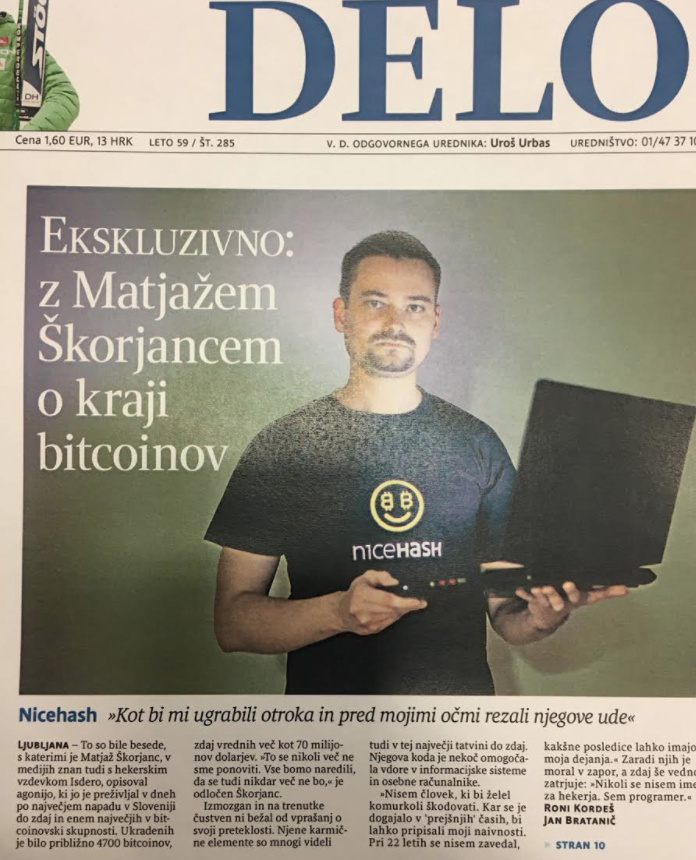
NiceHash CTO Matjaž Škorjanc, as pictured on the front page of a recent edition of the Slovenian daily Delo.si

A source close to the investigation told KrebsOnSecurity that the NiceHash hackers used a virtual private network (VPN) connection with a Korean Internet address, although the source said Slovenian investigators were reluctant to say whether that meant South Korea or North Korea because they did not want to spook the perpetrators into further covering their tracks.

CNN, Bloomberg and a number of other Western media outlets reported this week that North Korean hackers have recently doubled down on efforts to steal, phish and extort Bitcoins as the price of the currency has surged in recent weeks.

“North Korean hackers targeted four different exchanges that trade bitcoin and other digital currencies in South Korea in July and August, sending malicious emails to employees, according to police,” CNN reported.

Bitcoin’s blockchain ledger system makes it easy to see when funds are moved, and NiceHash customers who lost money in the theft have been keeping a close eye on the Bitcoin payment address that received the stolen funds ever since. On Dec. 13, someone in control of that account began transferring the stolen bitcoins to other accounts, according to this transaction record.

The NiceHash theft occurred as the price of Bitcoin was skyrocketing to new highs. On January 1, 2017, a single Bitcoin was worth approximately $976. On December 6, the day of the NiceHash hack, had ballooned to $11,831.

Today, a single Bitcoin can be sold for more than $17,700, meaning whoever is responsible for the NiceHash hack has seen their loot increase in value by roughly $27 million since the theft.

In a post on its homepage, NiceHash said it was in the final stages of re-launching the surrogate mining service.

“Your bitcoins were stolen and we are working with international law enforcement agencies to identify the attackers and recover the stolen funds. We understand it may take some time and we are working on a solution for all users that were affected.

“If you have any information about the attack, please email us at [email protected]. We are giving BTC rewards for the best information received. You can also join our community page about the attack on reddit.

However, many followers of NiceHash’s Twitter account said they would not be returning to the service unless and until their stolen Bitcoins were returned.


from
https://krebsonsecurity.com/2017/12/former-botmaster-darkode-founder-is-cto-of-hacked-bitcoin-mining-firm-nicehash/